Episode Transcript
[00:00:00] Mike: Hi, everyone, and welcome again to the Climatedad, the podcast where we talk about and explain the news and science of climate change and the things that you can do both as an individual and as part of an organization. I'm your host, Mike Smith, a father of two great kids and the founder of Acclimate, where we help businesses measure, reduce, report, and offset their footprint for an affordable price and without having to become a climate expert. Today, we'll be doing a session across a wide range of topics, including some of the basics of climate change, things known as rcps, or relative concentration pathways, what I like to call the rock in the hard place, a concept known as deadly heat and national security.
So buckle up, it should be a fun ride, and we'll be talking about a lot.
So let's start with some of the basics around climate change. The earth's atmosphere, as you probably know, is mostly nitrogen and oxygen. So 78% nitrogen, 21% oxygen, and there's about 1% that are these trace gases.
And of those, one of the most significant is carbon dioxide. As we've all probably learned in our education as humans and other animals, we inhale oxygen to convert fuel in our bodies into energy, and as we then exhale carbon dioxide, thankfully, in the biosphere, the flip of that is also true, that plants inhale carbon dioxide and use that in the process of photosynthesis and exhale oxygen. And that's all been mostly in balance for many, many years. The concentrations of carbon dioxide in the atmosphere have gone up and down over the eons, sometimes being well over 1000 parts per million, other times being significantly less. But in the late 19th century, a couple of scientists, one was a woman named Eunice Newton Foot. Another one was a guy named Svante Arrhenius, described about how carbon dioxide actually caused the gases that it was part of, like any sort of sample that included this, was known as radiative forcing, ultimately, which is that as infrared energy from the sun comes through the atmosphere, it's absorbed and retransmitted into the atmosphere by carbon dioxide, where other gases, such as oxygen or nitrogen, will allow that energy to just go ahead and pass through one and impede it. And so, without carbon dioxide, the infrared energy from the sun would hit the surface of the planet and radiate back out into space. Mostly, some of it would be warm by the rocks. And so we have carbon dioxide not only to thank for the plants that we eat, but also for keeping the earth warm at night. We would have much more drastic temperature swings at day and night. Without carbon dioxide, it's an important gas for life. And, you know, it's part of what makes the earth just such an amazing place to be. But it's gotten out of balance. If you think about it, eons ago, lots of plants lived and died. And that carbon dioxide, instead of being released back into the atmosphere, was stored in the bodies of those plants. And when they died, either the plants or the algae or other things that go through photosynthesis, they were buried. Sometimes that ultimately became fossil fuels. It was stored carbon from millions of years ago. That stored carbon, as we dig it up in the form of coal or pump it out in the form of oil and then burn it, is being released in the atmosphere. And so things that were in general balance for our atmosphere of living things has now become out of balance because it's almost like we've taken things that were stored long away and decided to re release it. And that's caused a high degree of human flourishing. We've had a lot of that release of energy has been what we've used to kind of build our civilization around. But there's a problem. As you add more carbon dioxide to the atmosphere, you warm it. And we have exceeded the ability of nature to capture that carbon dioxide, especially as we continue to cut down forests around the world, and especially in tropical areas. And so that has changed the pathways that we have to go on. And these pathways are known as relative concentration pathways, or rcps. Some of the stuff that came out of the science around the Paris accords, which we talked about in our previous episode, was that there was essentially like, different pathways that humanity has laying in front of us. These different rcps lead to different degrees of warming. And these relative concentration pathways are based upon the idea of, like, how carbon intensive, how much carbon we're going to release associated with the energy that we're going to consume. So whether it's fossil fuels versus solar, for example, and how much energy we're going to consume associated with a growing population and economic activity. And so you can kind of guess and model about what those are. And there's a graph that I like to show when I talk to people in person that shows kind of four different pathways there. And the thing that's always striking to me about this is that those four pathways are all warmer than our present day. Like, there is kind of no going back. And so when some of the doomists get a little bit about, like, well, climate change is coming, they're right, our future is, it will be different from our past. And that is a guarantee but those four pathways I sometimes like to talk about as being a manageable disaster, as the kind of the lowest, you know, lowest impact one to kind of a catastrophe, to the third pathway as being a cataclysm. And the fourth one is truly something more like an apocalypse. And I'll talk about more why. And I don't mean to be an alarmist, but I do mean that some of this stuff is alarming. So the lowest pathway, RCP Tuple, is a pathway where we get up to maybe about a little under two degrees of warming, and then we get down to about no more than about one and a half degrees of total warming. And this sort of pathway is going to be requiring us to pretty rapidly cut the emissions that we're doing there. This usually looks like about 50% emissions cut in the next decade, 50% of the remainder in the decade following that, and then 50% in the decade following that, to get to about a 90% emissions reductions by 20. At the same time, it also, in order for us to kind of hit that, that higher temperature and then to come back down means that we're going to develop the systems that are going to capture carbon dioxide back from the atmosphere. There's a lot of natural systems. So this is a regeneration of trees and forests and preserving the capacity of nature that we have now. But it also includes some potential technical solutions. And so that's important to think about there as well.
When I first started in climate, however, the pathway that was most likely and what was the baseline modeling for all of it was RCP eight. That's the apocalyptic scenario. That's where we get unconstrained hot temperatures, and we're looking at five degrees of warming by the beginning of the 22nd century and about like eight degrees of warning by the beginning of the 23rd. Just a drastically and apocalyptically different world. And we'll talk a little bit about that here in a minute. It's worth noting that of all the commitments that we've had coming out of the Paris accords, that we're kind of halfway between those two. We're sort of between pathways two and three, where we look at probably somewhere around three to three and a half degrees of warming. And that's kind of the baseline scenario now that, like, if we don't continue to push and work on this, that's probably where we're gonna go. And there's a lot of bad things that happen with that. We'll talk about that more with tipping points as we move forward. So, still a lot of work to be done. But there's also small, small cause for joy here, which is in the decade that I've been working on climate, we have shifted through the actions of many, many people around economics of renewable energy, for example. We've shifted from the apocalyptic scenarios being the most likely to something that's still pretty awful, but not nearly as bad. And so we should be happy for that. Now, I talked about this as kind of like a rock and a hard place. And I really do mean that. So the rock in the hard place is the idea that the world is going this direction. We are heading to some hard places. And if we fail to change the direction that we're going on, they get harder than they need to be.
But then there's also this rock on which we have to. We've built our civilization and that's the consumption of energy. And so one of my favorite little factoids is that if you're an american, or in North America potentially, if you're an australian as well, your refrigerator probably consumes ten times as much electricity as the average Nigerian does off of the grid in their entire lives. And I'm not in any position to deny a Nigerian a refrigerator. So we're going to have to figure out a way from an equity standpoint, to allow the developing world to develop, to responsibly develop in a way that people get access to some basic human needs. Everybody has the human right to food, water, shelter, refrigeration as we move forward. And any sort of premise where we deny those is one that's not really built for success.
So we have to figure out a way to both improve living standards and to reduce our impact upon the environment. This is something that's kind of sometimes known as donut economics, which is there's like this floor which everybody has to be above, and then there's this ceiling beneath which we have to maintain our. Reduce our consumption of resources. And one of my favorite things to talk about sometimes is the idea of false choices. And so a lot of times what you'll see is like, well, we have to keep burning fossil fuels for human flourishing. Well, we're not really actually helping people flourish as much as we should be. The global middle class has grown quite significantly over the last 30 years, and that's a good thing. But failure to deal with climate change is actually the biggest impediment to human flourishing, not the other way around. And so we have to figure out a way to do that. So it's not a choice between we need to take care of the environment or take care of people, or we need to take care of the environment or have a flourishing economy. It's actually we have to take care of the economy and take care of people in order to have a flourishing economy. And anybody that's not really internalizing, that is not being serious about the problems that we face or about where the world needs to go.
So that's one of the things I like to think about. There are some very deadly serious consequences for us to be thinking about, though, should we fail to do the actions that we need to. A few years back, there was a paper that came out in science advances about the concept of heat in the indian subcontinent, and it introduced some concepts that people hadn't really fully internalized. And if you want to read a good fictionalization of what is potentially to pass, I'd encourage you to look for the book the Ministry for the Future by Kim Stanley Robinson. And pretty much what that book describes, describes is what this paper said is a likely outcome. Within the indian subcontinent, which is India, Bangladesh, and Pakistan, 1.75 billion people currently live. It's not known for being a cold place, but if you look at a map of it, most of the heat is kind of up in the Ganges river valley in northern India. It's also where most of the agriculture and most of the economy and most of the population live within India as well. And so right now, about 15% of the indian subcontinent, of those three countries, the population experiences some sort of form of extreme heat every year. That is extreme. This kind of extreme heat is the sort of thing where you're really not doing physical activity outside. Yeah. If you aren't inside in air conditioning, you need to be sitting in the shade, drinking water. Just really, like, taking it easy. Sensitive groups are going to have some real health problems in an RCP 8.5, that kind of apocalyptic scenario that goes to from 15% of the population to over 75% of the population, over a billion people every year would be subject to extreme heat. Okay, well, that's livable. It doesn't sound awesome. Where would you live?
[00:11:50] So you have to start thinking about, like, what would happen if you live in a scenario there. But it also introduces the concept known as deadly heat. And deadly heat is something that we're really not super familiar with as humans, but it's coming increasingly to pass. And so deadly heat is. The idea is that the combination of temperature and dew point is so high that in order for water to evaporate, it's above about 98 degrees fahrenheit. Or about 35 degrees celsius. And that's a pretty scary sort of thing, because what that means is that even the healthiest bodies cannot cool themselves through sweat. It doesn't matter how much water you drink. It doesn't matter if you're sitting in the shade or if you have a fan on you, sweating will not cool you off. You will continue to heat up. It essentially means that if you don't have air conditioning, like, if the electricity should fail, there's a high likelihood that you could die.
And the ministry for the future illustrates that. It's a pretty, like, gruesome sort of story about, like, people effectively being cooked alive by the environment that they live in. So I'd encourage you to give it a read. It's kind of a bit of a depressing view of where we could go there. And don't think of this as fiction, either. We just last year in Lawrence, Kansas, the wet bulb temperature of 35 c. We saw that happen in Kansas. And so, as a result, the heat index was 134 degrees, uh, fahrenheit. That was deadly heat. Thankfully, uh, there was minimal injuries associated with it. It didn't last, uh, super long. But this isn't just in India. This is also going to be happening in, for example, the Mississippi river valley. And when you start thinking about that, that starts having, like, some pretty wide ranging national security issues, things that we all need to be thinking about. Um, and as a former Navy guy, I think about a lot what happens when, uh, millions of people, 70 million people, or potentially, uh, in the indian subcontinent, would be exposed to deadly heat in an 8.5 scenario, where do those people go? Would you continue to live there? If you lose air conditioning, you could die. It starts looking, you know, pretty dark. And so you start talking about migration and people moving, and we've seen what happens to political systems in Europe and in the United States with relatively small levels of migration and what that's done for political stability in those two regions of the world. What happens when and when people start moving in much higher numbers to those places? One kind of unappreciated fact is the world currently has the most amount of displaced people in the history of the planet. And that is unappreciated because most of those people are internally displaced. They've moved from one place in a country to another place in a country. But at a certain point, the capacity of a country to be able to manage its affairs and to have internally displaced, not become externally displaced falls. And then you start seeing mass migration.
So you're talking about political destabilization in the indian subcontinent. The Ganges Ramaputra delta flows is Bangladesh. Bangladesh is one of the most crowded countries in the world, and that river delta is the most likely to flood associated with rising seas. So now you have compounding effects with that. India and Pakistan are both nuclear states, and they have a historic, and they have historic animosity towards one another. They border a third nuclear state in the form of China, which has its own climate concerns that would be driving that, and also one of the largest populations in the the world. And so you can see how these things start compounding on each other very, very quickly and become something that cannot just be dealt with through traditional security measures. So I don't mean to say all that to scare you, but just to say, like, there are some very real consequences in failing to act. And it's something that I usually talk about with any new hire at Acclimate about, like, this is why we're doing this. It's not only just about saving the polar bears, it's about human flourishing and the prevention of human suffering. And it really is truly a fight for the future.
Climatedad podcast is brought to you by acclimate, the easy and intuitive solution for small and mid sized businesses. We help companies measure, reduce, report and offset their footprint without having to become an expert and at an affordable price. For example, we just rolled out a new feature making it even more affordable. Acclimate's starter tier. For companies with fewer than ten employees, you can get started for just $10 per month. Also, a quick request from everyone listening the Klimatedad pod as a recently launched podcast would benefit greatly from people like you who subscribe to. Also, write a review and share it with your family and friends. If climate means as much to you as it does to us here at acclimate, it's an easy and a free thing that you can do to help get the word out. Thanks.
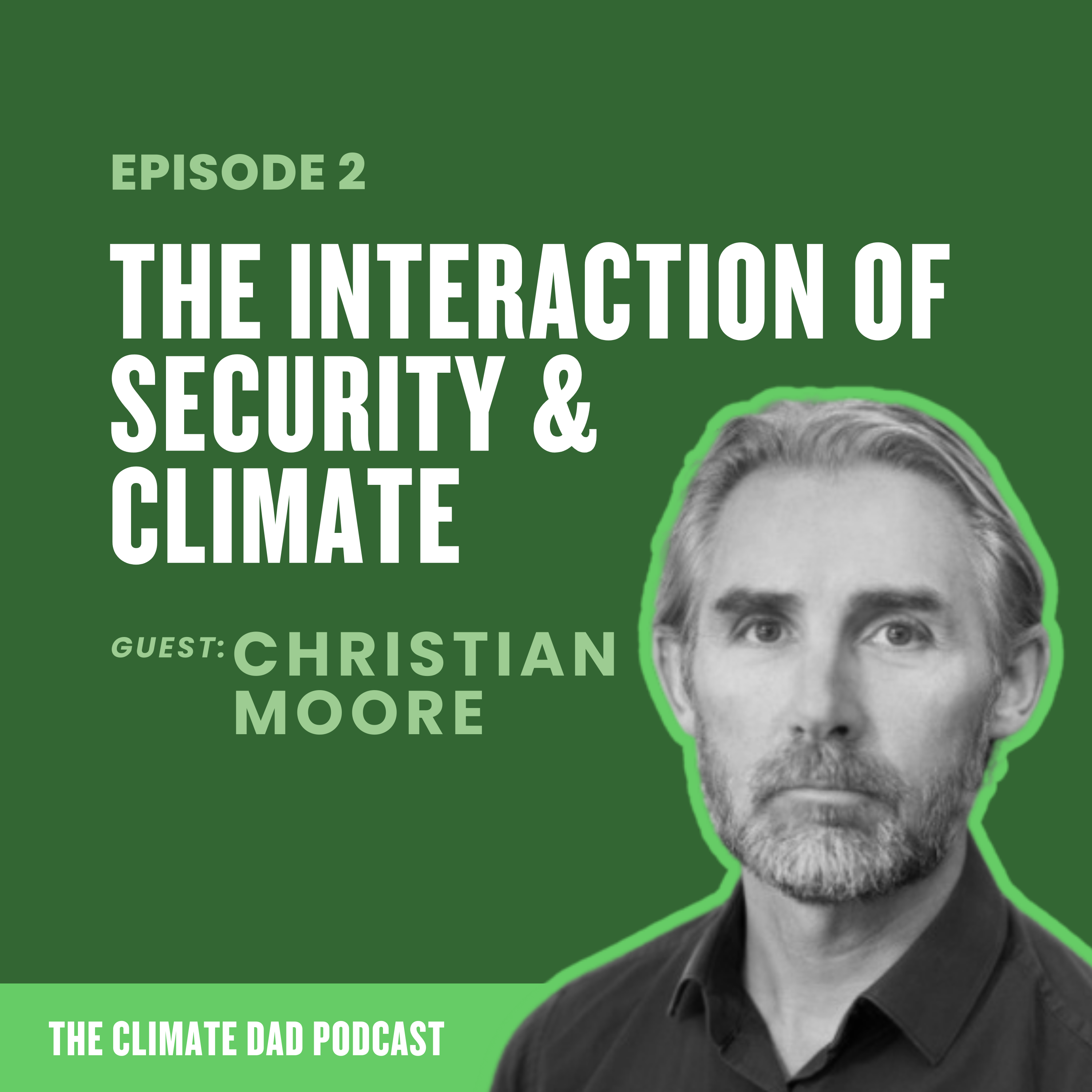
I'm glad to be joined today by Christian Moore, the vice president of risk consulting and the climate lead for concentric. We've been helping concentric here at acclimate for a while, and Christian is a quiet powerhouse of a professional that I've really enjoyed getting to know. His role is a unique one, being the lead on the security services that concentric offers to its clients, while at the same time managing the climate risks and impacts of concentric's operations.
I really enjoyed this interview. Christian is a veteran of the british military and has spent time in Belize working on both force preservation and security. It's really fascinating stuff. I think it ties into what we've been talking about. And moreover, his personal story really resonated with my own. So enjoy. All right, everybody, welcome. I'm here today joined by Christian Moore at concentric. In his current role, he's the vice president of risk consulting. And as we'll get into the discussion is he also wears the primary hat of being the climate lead within the company, both kind of within a risk construct, but also beyond that. So we'll talk about that more. Christian, really great to have you join me today.
[00:17:28] Christian: Thank you, Mike. Yeah, it's nice to be asked, and I hope I can bring some value in talking about our particular journey as a company and me as an individual.
[00:17:37] Mike: Yeah, absolutely. So, you know, the first question is, could you tell me just a little bit more about who you are? You know, your background? Obviously, we talked about your job title, but anything that makes you who you are is what I want to know.
[00:17:48] Christian: Yeah, sure. I mean, first and foremost, I'm a Brit, as I hope you can still tell. I've been in the States for 17 years now, but holding onto my accent with regular viewings of Downton Abbey, just to polish it up. And I was in the military in the UK for 20 years. I was in the british marines for ten of those years, and then our special forces for the final ten of those years. And then I sort of transitioned into, initially, corporate intelligence and then corporate security as a career. So I've been a consultant, really, since I left the military phases with an alcohol company in Asia where I was doing business intelligence. And then I had about six years with a focus on oil and gas out of Houston, managing their risk. And then when I moved up to Seattle and discovered concentric, we've had a focus. I have a focus there on private, family and corporate risk management. And, yeah, I think that's 37 years since I was 19 of thinking about risk in one way or another. And I find that it's a, you know, personally appeals to me as an area of interest and can't really imagine doing anything else. And so when I. As I, you know, I became, well, certainly I'll go back to, you know, I spent a lot of time in the jungle during my military times. I think three months in total, if I added it all together, that I was deep in the trees, both in Brunei, in Indonesia, and then in, in Belize. And, you know, I'll be Frank, that I had very little appreciation for the nature that was around me. I look back at that time now and just how precious it was as an experience to be dropped by helicopters just deep into prime forest and old growth trees and seeing things that are sort of untouched other than us camouflaged, humans roaming around, training, you know, in jungle warfare. And it wasn't really until I met my american wife that I began to give any thought whatsoever to, you know, to the environment.
She had trained as an environmental biologist initially, and as I courted her, I realized I probably needed to have something to say on that front. So I threw in a few white lies about how, how beautiful it had been in the forest and in the jungles.
But it really wasn't until my current boss dispatched me down to Belize to do some pro bono consulting for a group of forest rangers there that I really joined the dots between my interest in risk and the need to protect nature. And so since then, it's become probably my driving passion.
[00:20:30] Mike: I really love that story. It's also interesting every so often you meet a veteran that's in this space. And so it's interesting to see how your identity, like, do you think of yourself? You know, you spent 20 years in the service, so I would imagine you do think of yourself as a veteran.
[00:20:46] Christian: Yeah, I do. You know, I think it's, in the US, veteran status is somewhat different. The whole, you know, thank you for your service is something I've had to get used to. You know, I was, I feel extremely lucky to have had 20 years being paid to roam around doing interesting stuff, and I don't feel any need for thanks. But I have now four teenagers, two of whom are themselves orienting towards the military. And I'm quite happy with that, although I'm not pushing them. But I just think there's no better start in a young life than any form of service, you know, whether it's military service or otherwise.
And, you know, I'm just very grateful. It set me up both with a, you know, sense of responsibility and it, you know, it gave me a card to put on the table when I was looking for other jobs. And still today, then I, you know, I don't dwell on my being a veteran, but I do find that when it comes out in conversation, it's a point of interest, becomes a point of pride as you realize that other people are grateful for what you did, maybe impressed by.
[00:21:50] Mike: Yeah, in my own kind of experience as a veteran, I feel that way as well, which is just like I lived an incredible life for years and, you know, my country made great investments in me as a person. And so, Mike, I don't even think.
[00:22:04] Christian: I knew that you were a veteran?
[00:22:06] Mike: Yeah, I used to fly f 18s for the US Navy.
[00:22:08] Christian: Blimey.
I was at a wine tasting a couple of weekends ago and got introduced to a very haggard looking fellow who was in construction, and he looked like he'd been building, you know, houses in the valley here for decades. And I said, have you always done this? He said, no, I flew fast jets off aircraft carriers for twelve years before this. I forget what he flew precisely, but, yeah. Thank you for your service, Mike. I love that, you know, veterans are finding their way into, into this space, and I know I have a significant network of veterans who are in, or looking to find something useful to do in the environmental protection space.
[00:22:49] Mike: Why do you think that is?
[00:22:50] Christian: Well, I think primarily it is this. It broadens your perspective to join the military, both in terms of the part that you are playing in a much broader strategic role for your country. They send you to interesting places, so you, you know, you get mind expanded there. You know, we all will have useful memories that serve as benchmarks of places we've been where people live very different lives. And that's always made me feel grateful for the place that I was born into, the circumstances that I was born into. And I think, you know, you get exposed to that as a young person, and the values that, that us and UK military strive to instill in you, I think they leave you, and I'm gonna swear. Now, giving an f, you know, caring is a bit of a soppy, sensitive word, but giving an f is something that I think you find all veterans come out with just instilled in them. And then I think that the sense of risk and security is instilled in anyone who's served. And so I think in the current times, and this maybe previous decades, but in the current times, you cannot avoid awareness of the threat from environmental destruction and changes in the climate. And so if that sense of security and risk is instilled in you, you're gonna, I think, have a, you'll see some natural alignment between things that you care about and are good at and things that need doing. My biggest frustration, and we'll probably get under this, is finding a way to get paid to do that. You've done a good job, sir, at that. I'm still trying to figure it out for myself, but I feel that I'm slowly and slowly closing in on what doesn't exist right now, which is an environmental security industry that isn't nonprofit, it's commercially driven, it's going to attract veterans for sure. Young people who care and I'm excited to be potentially at the forefront of that.
[00:24:46] Mike: So I couldn't have said that better myself as well. Like, I think you and I are very similar minds about like why I was attracted to this work.
Can you tell me a little bit more about background about what concentric does? And then specifically why is concentric concerned about sustainability and climate? Like, it wouldn't necessarily seem to be an obvious connection.
[00:25:06] Christian: Yeah, so I mean concentric is a security company that includes the need for intelligence in order to deliver security. So security and intelligence are the two main areas that we deal in. Our clients range from private individuals, families, family offices, corporates and non profits. And our stated mission is manage risk to keep people safe everywhere. And by that we're talking geography and we're talking physical and cyber. The company's been around for, you know, around twelve years, I would say, and has grown to be the biggest security company on the west coast. I think it was twenties when our founder, Roderick Jones, who also happens to be a Brit, residing in San Francisco, he himself was a former special branch police officer in the UK. He just through sitting at a dinner in London next to someone from the Belize High commission, came up with this opportunity for concentric. Have a look at what these rangers and Belize were doing in the chickabul National park, which is one of the biggest in Belize and it's on the border with, with Guatemala. And they had a lot of cross border incursions into, into that national park for illegal logging, gold mining, illegal wildlife trade. So that was fascinating for me to go back into, into the trees, as we used to call it. And I spent a week with the rangers there, up there on the border. Fascinating. Working with non profit rangers dressed in camo and carrying off wearing camouflage cream. It was almost alarming to see that juxtaposition of nonprofit conservation and a military role. They shared it with the Belize Defence Force, but it was a very militarized approach and there was no doubt that the conclusion they expected was that you need better camouflaged uniforms, you need more powerful weapons, you need all of the military tools of the trade that you don't have in order to combat this problem. But I actually came away with realizing that what they really lack is situational awareness or what we came to call domain awareness. So if you take a group of rangers who've got responsibility for a national park, that was a lot of real estate to keep an eye on. Impossible to do without surveillance technology, essentially, and they weren't using that, they were picking areas of the forest, maybe picking up on a lead from a local community. And then they were making long patrols into these areas up by the border, trying to find people doing things they shouldn't be doing. And it sometimes, it sometimes culminated in armed exchanges with people getting shot and in some cases dying. All of which seemed to me somewhat unnecessary. And what was lacking was something that we do use in the military, which is domain awareness, which you can achieve through space observation, from satellites and through ground based sensors. There was a whole range of things that, you know, were familiar to me from my military days that could usefully be applied here in a similar situation where you got a small group of people trying to protect a large piece of real estate that by its nature it's forested nature, it's difficult to see what's going on. So I came back and just did a bit of googling to find out if anyone was doing anything relating to this. And I did. I found some fascinating advances have been made in satellite monitoring, the use of drones, evolutions in camera traps, seismic sensors, and most excitedly for the forest acoustic sensors.
And I've subsequently ended up climbing 100ft up into the canopy of Belize to help install phenomenal acoustic sensors that run off solar power for four years before they need any serious maintenance. And they are just continually sucking up all of the acoustic data within a square mile of this sensor and then using AI to process that acoustic data to differentiate between natural sounds and human made sounds. Whether it's a vehicle or a gunshot or voice, somewhere there shouldn't be a human. These sensors will hear that. They're working on triangulation so they can be more accurate about. But they certainly immediately notify that within this square mile there is the sound of a chainsaw, for example. You know, so that helps the rangers go where they're needed and maybe they go slightly better prepared than they would do if they just bumped into the legal locking event. Quite fascinatingly, I found the team, they're called rainforest connection. I'll give them a plug here. RFCX. They are on about the third or fourth generation of these acoustic sensors. They brought a bioacoustic team of scientists into their fold along the way and they realize through machine learning that the acoustic signature of a chainsaw is like just 1 db different from that of a howler monkey. So the alerts kept, the sensors kept triggering when they heard the howler monkey and they go there and there was no chainsaw activity, no evidence of it. And then they began to realize and so now the AI understands the difference even though it's very fine difference between the two. So fascinating application of technology. We ended up doing a pilot down in Belize and proved that that can be really useful. My constant struggle is to find the bandwidth and the way to have that paid for, to do it more expansively, but certainly along the way, you know, so I had the support of our founder then, and we all, I think, at the same time, realize this very natural link between a security risk consultancy and the risk that we all face from not protecting those forests down in Belize. So it's a fascinating risk model. When you think about at the ground level level, you've got the loss of biodiversity, the loss of captured carbon, the loss of blood, as people confront each other over the protection of these carbon assets and this biodiversity. You then had Belize and Guatemala actually saber rattling at each other over these cross border insurgents. No doubt that the pilfering from this particular forest was happening was part of a chain moving through Central America to feed us our cheap lumber. And then you've got the, you know, the impact on climate change of those events down in Central America are directly impacting me, my kids, their future, everyone in our company. I mean, it's a. It's an inescapable risk, and probably the greatest one that we all face together. And there was just this joining of dots in my mind, in the mind of our company's leadership. But it just made complete sense. It made so much more sense that a company like cars would get more directly involved on the front lines than it would if we were making, I don't know, car tires and trying to reduce the environmental and climate impact of that, you know, that production of that product. And so we feel a sense of purpose that we really ought to, now that we've seen that, we really need to do something about it and get more directly involved.
[00:32:23] Mike: I think that's an incredibly vivid story. And talking about quite literally being on the front lines of. Of environmental destruction and climate change makes it very personal. And I appreciated hearing that from you. It's definitely something that I've talked about a little bit as well, which is that climate is the number one threat multiplier for the international security order out there. And it's the sort of thing that if we let it get out of control, security itself will get out of control. And so it's both, like, in the short term risk and the kind of the longer term risk that you see here. So I love this discussion about risk, environmental disruption, destruction and security.
[00:33:00] Christian: No, I could as soon as you said threat multiply, which, you know, for us military people is second language. But that's. I hadn't included that in my, off the top of my head list there. But that, you know, when I think about Belize and I think about Central America and I think about environmental degradation there, I think about the increased prevalence of hurricanes and weather events that are making it a struggle, more of a struggle to earn a living down there. You know, there are other factors at play, of course, but just the environmental factors are driving people north to perceived, you know, safety and a better way of living up here. So I really do. I really feel that there is important work to be done down there. We ideally would have those people stay there and we would pay them to do the important work that's required to help us but also, you know, help themselves, you know, down there on the equator facing those, those most direct impacts, the earliest impacts, I think, of climate change. So there's something in that I think that I'm striving towards. The big question is, where do you find the money to fund all this?
[00:34:07] Mike: Sure. Well, let's talk about that a little bit. So it's an internal project here. It sounds like if I had to guess here, the person that usually brings up that there's a problem gets tasked to be the one to solve it.
So it sounds like that's kind of how you got to this. How about, how did you deal with this internally? Did you have, how did you convince leadership and other of your colleagues to work on this?
[00:34:31] Christian: Well, I mean, the origin story of concentric doing anything around sustainability was not that experience in Belize just prior to that. And very conveniently, our number one client, which is a family office, the principal of that family, was taking a significant interest in climate and had written a book that was going to be his entry into the discussion on climate. And the family office reached out to all vendors to just sort of a finger in the air to see what, if anything, was being done by vendors to the family to, you know, around sustainability. And so the, the literal question to our leadership was, what does green security look like? And I at the time was, my title was director of special projects. And I just came back from Belize, you know, in order to secure the attention of my wife had become a faux tree hugger. And so for all those reasons, it came to me to answer that question, what does green security look like for this company?
And the. So there was buy in from the top at the outset.
We needed to answer that question, and we did it through joining the Green Business bureau, which I believe is now called the Green Business Benchmark. And working through their platform to identify opportunities for us to reduce our environmental footprint. Office recycling, composting, low energy lighting, power strips, a volunteer day, all sorts of initiatives that you could complete in return for points and elevate up through their tiered structure. So we're actually, five years later, platinum member of the green business benchmark. We're also on the members advisory council. We were one of their earlier sign ups, and I started asking lots of difficult questions, like, do you guys do anything around carbon, for example? And they didn't. So I was invited to join the members advisory council, and there are ten companies that have a representative on that we meet quarterly, and they now have a carbon component to being a green business within the green business benchmark.
But prior to that, I identified that we're covering the environmental impact of the company through GBB, but we're not addressing the carbon footprint again. Five years ago, that was. Even the use of the term carbon footprint to leadership met with quizzical looks. But one of the earlier movers on this was Amazon, and they established, along with the non profit, must not blank on this global optimism, led by Christina Figuera, who was the architect of the Paris climate agreement. She got together with Jeff Bezos and they established the climate pledge.
We, I think with the 200 signatory, I think they're up to five or 600 now.
The sports arena in Seattle is now climate pledge arena. And actually, my water bottle here.
[00:37:39] Mike: There you go.
[00:37:41] Christian: Made by our local company, Mir M I I r, who presented at a recent climate pledge gathering. They make water bottles and other liquid containers using half as much metal as the typical product. And they are signatories. So we signed the climate pledge, which essentially you commit to accounting for your carbon footprint, reducing where you can, offsetting with high quality offsets, the unavoidable emissions, and then reporting all of that publicly. We've done everything except publicly reporting, but we're doing that this year for the first time. We have until 20. But our own goal, actually, our own goal is the end of 2020. We're definitely on track for that and might even be able to accelerate it. But the climate pledge was a perfect framework for us. I mean, happy to tell you that Amazon is one of our clients.
And so there was a lot of alignment there, and that's been our vehicle for starting our carbon accounting journey, which, of course, led us to me talking to you, Mike.
[00:38:41] Mike: Gotcha. Okay, let's switch topics, or switch gears just slightly here, which is, what do you find exciting about working on climate or what do you think's the total headache?
[00:38:52] Christian: So I don't know whether you ever ejected from your jet, Mike.
[00:38:57] Mike: No, thankfully, I would be about an inch shorter if that had happened. So I'm glad to not have done that.
[00:39:03] Christian: Yeah, I did a lot of parachuting sometimes into the sea at night. It's very exciting but also quite terrifying. I actually have a fear of heights that I had to overcome throughout my career. And yeah, when I think about climate, it's terrifying. And certainly in the context of how fast things are changing, how those models were all inaccurate in their estimation of when things would really start to change. And yeah, I've got four teenagers who are going to be living in that world for a good while longer than me. So it feels very deep down scary to contemplate what the world is going to look like in 510, 1520 years time.
Even if we do a lot of good stuff, it's going to be a very different world to the one that you and I grew up in. So that worries me. But I also, with that, the whole thing I find quite exhilarating because it's happening now as the generation that has the imperative to do something about it, or not, or not do enough. When I was at the, there was a climate pledge summit for signatories to gather in New York. We, of course, all offset our flights. John Kerry spoke there and was very impressive. I see he's now relinquishing that, that role. But the, the most impactful speaker for me was Jay Inslee, who's the governor of Washington state. And he made it, he made a point that really stuck in my head and it was a quote from Winston Churchill in October 41. And he was talking to his old school, Marlborough school in the UK, and he referred to, what were they? Two years into the second World War, three years from its conclusion. But by then he'd managed to get the Americans, you know, support and things were somewhat turning around from a backs, back to the wall situation.
But he referred to in his speech to these school kids as these are great days, which surprised some people. It became a headline at the time. But what he meant was these are days of incredible significance and importance. And he went on to say, we are lucky to be a part of tackling these great challenges and in so doing, reorienting the course of history as they did with the Second World War and as we need to do with tackling climate change. So, yeah, JJ Inslee left us with that. These are great days, scary, but significant and people like you and me, Mike, have the opportunity to be there at the pivotal moment, getting stuck in and turning things around, if it's possible.
[00:41:50] Mike: Yeah, I love that these are interesting times, but they're times of great import in some ways. You could say that the next 20 years are potentially the most impactful in all of human history.
[00:41:59] Christian: Yeah.
[00:41:59] Mike: And so, yeah, I feel fortunate to be able to help, to do my part, to steer the direction I think it needs to go.
[00:42:06] Christian: Churchill also said, never, ever, ever give up. It was in the same speech to these school kids, but of course the whole world heard it and they remember that, that quote in particular, but that, that I draw some strength from as I keep looking for the open door to getting more involved in the frontline work. I know it's there, I'm banging on all sorts of different doors, but I'll find the one that's open through not giving up. But, yeah, exciting times.
[00:42:35] Mike: I think it was. The IPCC said that every degree counts, every decision matters and every year matters.
[00:42:42] Christian: Yeah. Oh, absolutely.
[00:42:43] Mike: And that's where we're at.
What's something that you've learned about climate on this journey that you wish everybody knew?
[00:42:49] Christian: Oh, I mean, I've learned a heck of a lot for sure. I still defer to you on some of the technicalities of carbon accounting, still don't fully get my head around scope three emissions, but I figure I don't need to because you understand that. But the thing, I think it's the incredible power potential of technology to help us protect the natural world because, yeah, there just aren't enough boots on the ground to do it effectively. There never will be. The scale is going to be achieved through existing and fast evolving technology, sensor technology, space based and ground based. As I told you about those acoustic sensors, I mean, you're in this world and it seemed apparent that you weren't aware of these acoustic sensors and what they can do. And I'm probably already out of date because it's so fast moving. It's really uplifting to, you know, technology is clearly not the solution for everything. But I think in this particular case, when we're looking at environmental protection, it's staggering how much more we could be doing with existing technology that is progressing very fast.
[00:43:59] Mike: There are definitely within remote sensing both, you know, as you talk about space based acoustic sensors, etcetera, that is a rapidly evolving field and it's certainly within the space of carbon offsets as well. It's also changing how we measure and verify carbon offset production. It's interesting.
If you had ten times the budget that you have now, what would you.
[00:44:24] Christian: Do differently with ten times the budget? A portion, some decent percentage of that to novel ideas that are still in development that hopefully will derive future credits. Well, two companies specifically that I'm fascinated by. One is called seaweed generation.
They are in the Caribbean.
They've developed surface drones that are collecting sargasm before it lands on caribbean beaches and creates a toxic atmosphere and ruins the local tourist industry. And they are scooping this up like a big surface fish. And when they get to a certain weight, the drone deep dives and takes it down below, below a thousand feet, I think, which is where the seaweed, the air pockets burst completely. Yeah, burst or just flattened to the point where they're no longer buoyant. And then they release this sargassum. Instead of landing on a beach, it lands on the seabed and gets eaten by fish.
And they film it. The whole thing is filmed with cameras, so they're still in the prototype stage. And I've spoken to them directly, and buying an offset from them is more expensive than it is buying from, you know, forest protection in Brazil, which we currently do. But I've had more money. I would definitely place more bets on companies like that. The other one is, you may have heard of running tide. And actually, I was aware of them a couple of years ago.
They were seeding lines in the ocean with sugar kelp. And then when the lines with sensors on them got to a certain weight with the kelp, of course, it grows through sucking, to some extent through sucking carbon out of the atmosphere. Very quantifiable. And then they would sink this line, similar to the sea regeneration, they'd sink this kelp to the floor for seafood.
Those sorts of things fascinate me and excite me. And when you think of the scale at which they could be done, the potential for them, it's very uplifting. And I wish if I had more money, I would buy more of their credits to help them along that development process.
[00:46:35] Mike: I know running tide, for example, has had some early funding through stripe, and some of their work around that. And so that's definitely important work. We work with a preferred partner called CNoT that does offset curation. Essentially, they buy the offsets for you, and part of their portfolio is to invest some part of their offset buy into. These emerging technologies aren't at scale yet, and so it can never be like the bulk of your portfolio, but they are definitely an important part of that where we go.
[00:47:05] Christian: Yeah, I think when concentric I want to do that with a portfolio approach, and I want to have some portion, even within our existing budget, some portion of that, to be looking at these future methodologies for capturing carbon, because it's important to do it. But also, there's just a great story there. It's fascinating stuff. You know, we produce an internal green team newsletter, and I've referred to these types of opportunities before, and you can just see, you know, faces light up. This is kind of cool stuff that we can be a part of. I don't know that I have mentioned, but we've seen a really profound impact of our sustainability efforts, supporting recruitment and retention, particularly among, are we allowed to say, millennials? I think so.
But plenty of young people that I work with on my green team, part of their continuing desire to work for concentric is that, you know, they've seen on our website before they were recruited that we're talking about the things that we do, and then they get here and find we're actually doing them and that they can be a part of that. We've had great feedback from our HR team that it's one of the things they ask about the most.
And then I feel it within our green team and broader interest from the company when we breathe out that this is. They like belonging to a company that is involved in this and involved in a way that is genuine and as far from greenwashing as we can possibly get 100%.
[00:48:30] Mike: Would you say that it's helped you with employee retention?
[00:48:34] Christian: Absolutely. For the same reason, and because it's certainly in our space, there aren't many people, there aren't many other companies who are thinking this way. We're not aware of any other medium sized consultancies that have done what we've done, but we make a fair bit of noise about it. In marketing, I like to think that it helps generate interest and maybe new business. But we also would love it if all of our competitors did something themselves. That's how we're going to unlock the full potential of business to tackle this problem.
[00:49:10] Mike: All right, last question. If you were going to write a book, what would it be about?
[00:49:15] Christian: So you'll be surprised. I've written two books, okay, neither of which have been published because I haven't submitted them. The first book I wrote when I left my 20 years in the military, I wanted to be a writer. My wife was working in Brazil, leading college kids on environmental tours of Brazil. So I went, handed over my squadron one day, and the next day I stopped shaving and plugged into a group of Antioch college kids, most of whom were barefooted and literally tree hugging. And I went from commanding a special forces squadron to roaming around Brazil with a bunch of college kids and also trying to write my first book. So I had a period about six months where I tried to write a book. I did complete it and went through various edits. And it was actually an environmental, like an eco thriller based on someone with a similar background to mine, who similarly fell into environmental security, in this case, working alongside indigenous people in Ecuador to protect their forests from oil development. And that was based on having an ecuadorian friend who was a former ecuadorian marine who was absolutely engaged in that himself. So it was a pretty decent book. But then my first son came along and I realized how little you might well be or most likely will be paid for your book, even if you get published. I followed the money, sadly, but it's still there. It may see the light of day one day. And then I've also written a book with my wife. She and I have written a book about how we met in Paris 20 years ago from two different perspectives, alternating chapters. I won't go into it now, but it's really quite the romantic story, and not just because it was in Paris. I would love, in my retirement, to pick up the eco thriller genre and get back into that green James Bond.
[00:51:02] Mike: Green James Bond. I love it. And I think that's where we should wrap this up. Christian, I've really enjoyed speaking with you today. I think you're a fascinating person. I hope you do actually get that book published sooner rather than later. And I want to thank you for your time, for trusting acclimate, for the work that we do with you all.
It's great to talk with you.
[00:51:21] Christian: I've really enjoyed it. As anyone in the company will tell you, if you give me an inch as far as talking about the environment, I just. I'll take a mile. It's within everything that I do at concentric. It's the bit that that excites me the most, that I feel most fulfilled by. So this I saw in my calendar. I got a whole hour to talk about this stuff. Wonderful. And it's been wonderful. Thank you. Mike.
[00:51:49] Mike: What do you think of Christian? Like I said, I really enjoyed how he connected the dots of nature preservation, climate and security.
Anyways, that's our show. I want to hear from you. Go to acclimate.com again, A-C-L-Y-M-A-T-E or send an email to theclimatedadclimate.com to submit a question for me or the show. Thanks to Christian for joining me today. And thank you all for listening. I'll be back next time with a breakdown of all things climate and with another guest. Make sure to subscribe to the climate dad, wherever you get your podcasts and to share like and comment on social media. My name is Mike Smith, and this was The Climate Dad.